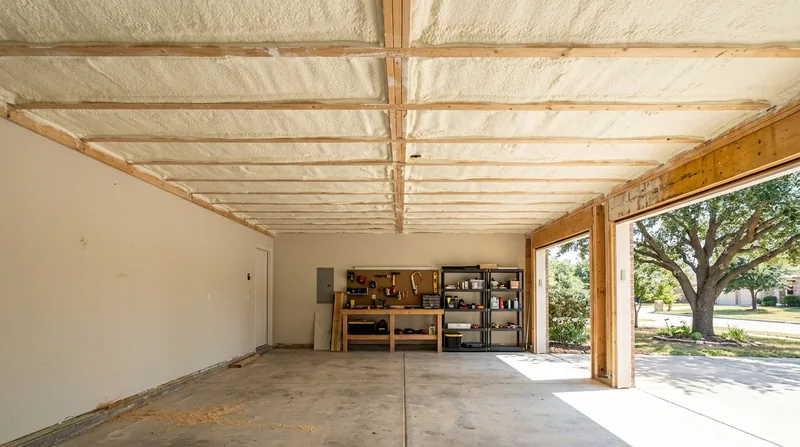




Garage spray foam insulation in College Station transforms an uninsulated or poorly insulated garage from a heat sink into a climate-controlled space that protects vehicles, tools, and equipment while reducing the strain on your home's air conditioning system. In the Brazos Valley, where summer temperatures climb into the high 90s and humidity sits heavy from June through September, an uninsulated garage allows heat to radiate through shared walls into living spaces, forcing your AC to work harder and longer. Whether you own a single-story cottage in College Hills, a brick ranch on the Eastside, or a two-story with a bonus room above a garage in Traditions or Southwood Valley, spray foam seals the thermal envelope of your garage ceiling and walls, cuts radiant heat transfer, and improves comfort year-round. We've been installing spray foam insulation across College Station, Bryan, Navasota, and the surrounding Brazos Valley since 2012, and we understand the specific challenges of this climate and building stock. This page explains how garage spray foam insulation works, what it costs, and how to find the right contractor for the job.
Why Garage Spray Foam Insulation Matters in College Station
A typical attached garage in College Station sits directly under a vented attic that routinely reaches 140 to 160 degrees Fahrenheit during summer. Without insulation on the garage ceiling, that radiant heat transfers downward into the garage and radiates through any shared wall into the main house. If your garage is heated or cooled (or if you use it as a workshop, home gym, or storage space for temperature-sensitive items), an uninsulated ceiling means you're conditioning a space that bleeds energy into the summer air. Spray foam stops that transfer at the source, creates an air barrier that mechanical ventilation cannot match, and gives you back a usable space.
- Sealed garage ceilings reduce radiant heat gain from the attic, lowering cooling costs for the main house.
- Spray foam adheres to rafters, joists, and rim boards, eliminating the air leaks that fiberglass batts cannot reach.
- A finished garage space stays cooler in summer and warmer in winter, extending the life of stored vehicles and tools.
- Foam creates a vapor barrier that protects structural lumber from seasonal humidity swings in the Texas climate.
These benefits apply whether your garage is a simple 400-square-foot single-car space or a large three-car structure with a workshop or storage loft.
Key info: Many homeowners in College Station, Bryan, and Brenham treat the garage ceiling as the highest-ROI spray foam job on the property because it's smaller in square footage than an attic, sits directly above a lived-in space, and delivers immediate comfort gains. Permits vary by city, so verify with your local building department before work begins.
How We Install Garage Spray Foam Insulation in College Station
Our process begins with a site visit to measure the garage ceiling, assess existing insulation, check for air leaks, and identify any moisture or structural issues. We then provide a written estimate with the R-value and foam thickness we recommend, explain the cost, and schedule the work at your convenience. On installation day, we prep the space, seal seams and penetrations with foam, spray the ceiling to spec, and manage ventilation throughout the cure period. The entire job typically takes one day for a standard two-car garage, and the foam reaches cure in 24 to 48 hours, after which the space is safe to reoccupy.
- We inspect the garage ceiling, walls, and rim board to identify the scope and any pre-existing damage or moisture.
- We seal air leaks around ductwork, electrical penetrations, and the rim joist where the garage meets the house frame.
- We spray closed-cell or open-cell foam to the thickness required for your R-value and local code.
- We manage mechanical ventilation and allow the foam to cure for 24 to 48 hours before you return to normal use.
- We inspect the finished work and walk you through care and maintenance.
For more detail on our approach to air sealing and foam application, see our page on air sealing in College Station.
Example: A homeowner in Southwood Valley with a two-car garage ceiling (500 sq ft) chose 2 inches of closed-cell foam for an R-value of 14, sealing the rim board and the penetrations where the HVAC return duct entered the attic. The job took one day, and the garage temperature dropped 8 to 12 degrees by mid-afternoon on the first hot day after cure was complete.
Garage Spray Foam Insulation Methods: Closed-Cell vs. Open-Cell
The choice between closed-cell and open-cell foam depends on your climate, budget, and the specific performance you need. Closed-cell foam is denser, carries a higher R-value per inch, and creates a vapor barrier that resists moisture and air infiltration. Open-cell foam is less expensive, offers good thermal performance at thicker applications, and allows the substrate to breathe. In College Station's humid climate, closed-cell is the more common choice for garage ceilings because it manages seasonal humidity without absorbing moisture. However, open-cell can work well in garages that are not conditioned and do not face moisture risk.
| Approach | Description | Best for |
|---|---|---|
| Closed-Cell Spray Foam | Dense foam with R-value of 6 to 7 per inch, acts as a vapor barrier, resists moisture and air infiltration. | Garage ceilings in humid climates, spaces that will be conditioned or used frequently, rim boards and rim joists. |
| Open-Cell Spray Foam | Lighter foam with R-value of 3.5 to 4 per inch, allows substrate to breathe, lower cost per square foot. | Unconditioned garages, attics with existing ventilation, applications where vapor permeability is desired. |
| Foam + Air Sealing Combo | Spray foam to spec, then seal all seams, penetrations, and rim board edges with caulk or closure strips. | Any garage where maximum air barrier performance is the goal; standard in our installations. |
| Retrofit Over Existing Insulation | Remove old batts or blown-in fiberglass, clean the deck, then spray foam to new R-value spec. | Garages with failed or settled insulation, spaces where you want to upgrade thermal and air performance in one pass. |
For a detailed comparison of foam types and their performance characteristics, see our guide to closed-cell spray foam insulation in College Station.
Garage Spray Foam Insulation Cost in College Station: What to Expect
Garage spray foam insulation in College Station typically starts at around $1,200 for a small single-car garage ceiling with open-cell foam and standard air sealing. The final cost depends on several factors: the square footage of the ceiling and walls you choose to insulate, the R-value and foam type (closed-cell costs more per square foot than open-cell), whether you need to remove existing insulation first, accessibility, and the condition of the substrate. A two-car garage with a 500-square-foot ceiling in closed-cell foam generally runs $1,800 to $2,500, while a three-car garage or one with additional wall insulation can exceed that range. Adding rim board and rim joist sealing, which we recommend in most cases, adds to the total but prevents air leaks that would otherwise undermine the ceiling insulation.
The best way to understand your specific cost is to request a free written estimate from our team. We measure the space on site, explain what R-value and thickness make sense for your climate and use case, and provide a firm price with no surprises. We typically respond within 24 hours and can often schedule work within a week. Call us at (979) 406-5185 or visit our pricing page for more detail on what drives costs and what's included at each price point.
Garage Spray Foam Insulation Near Me: What to Look for When Hiring a Contractor in College Station
Not all spray foam installers are equal. Some crews operate out of out-of-state trailers, spray a job in an afternoon without mechanical ventilation, promise immediate re-entry, and disappear when the odor or performance issues surface weeks later. Others are local, insured, and stand behind their work with a reasonable warranty and a phone number you can actually call. When you're evaluating contractors for garage spray foam insulation near College Station, ask these questions to separate the honest operators from the rest.
- Request a written estimate that includes the R-value, foam thickness in inches, and the total square footage being insulated.
- Confirm the contractor carries general liability insurance and ask to see a certificate of insurance; verify the coverage is current.
- Ask whether the contractor holds any municipal contractor registration required by your city, and verify it with your local building department.
- Ask about the curing process: mechanical ventilation should run during application and for several hours after, and re-entry should not be promised before 24 to 48 hours.
- Get references from recent jobs and call them to ask about odor, timeline, cleanup, and whether the contractor was reachable if questions came up later.
- Understand what permits apply in your city and whether the contractor helps you navigate the process or leaves it to you.
- Ask about the warranty: honest workmanship warranties are typically one to three years, covering application defects, not the foam material itself.
For more guidance on how to verify any contractor and what to expect from a professional installation, contact us to discuss your project and ask any questions about our process, credentials, or experience.
Garage Spray Foam Insulation in College Station: Pricing Guide
| Service | Price | Details |
|---|---|---|
| Single-car garage ceiling (open-cell) | Starting at $1,200 | Approximately 300 sq ft, 2 to 3 inches open-cell foam, includes air sealing and basic cleanup |
| Two-car garage ceiling (closed-cell) | Starting at $1,800 | Approximately 500 sq ft, 2 inches closed-cell foam at R-14, includes rim board and seam sealing |
| Three-car garage or garage with wall insulation | Starting at $2,400 | 700+ sq ft including walls and rim joists, closed-cell foam, removal of old insulation if present |
| Retrofit with existing insulation removal | On estimate | Cost varies with volume of material to be removed, disposal fees, and new foam specifications |
| Travel and estimate | Included / Free | No charge for site visit or written estimate in College Station and surrounding Brazos Valley service area |
Indicative pricing, the exact cost depends on square footage, finish, and site access. Free personalized estimate within 24h at (979) 406-5185.


